
Program viability
Move beyond low-enrollment labels and understand what is actually happening.
Not every challenged program has the same problem. Some face declining demand, some are poorly positioned, and some are financially strained but strategically essential. Others carry institutional value that enrollment figures do not capture, and many need redesign more than anything else.
Viability review should open options.
Provost Lab helps leaders distinguish among these situations and identify how a program might be strengthened for continued viability. The analysis surfaces evidence across the full range of ways a program can move forward.
The range of responses a viability study is designed to inform.
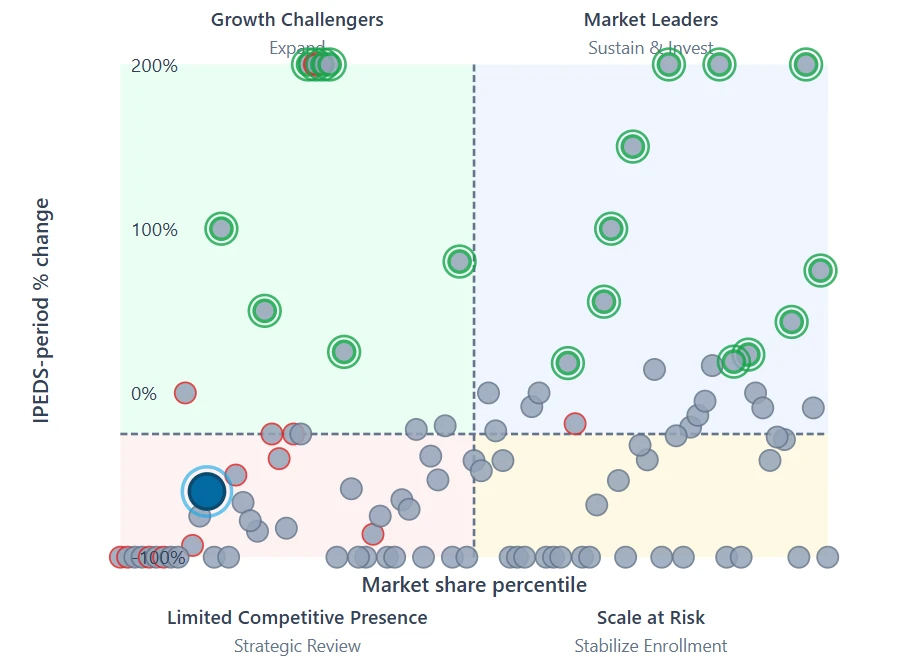
Where the program stands among its peers.
Provost Lab places the program among comparable programs nationally by market share and recent growth. The four positions, growth challengers, market leaders, scale at risk, and limited competitive presence, each suggest a different conversation, and the peers gaining ground show what is working elsewhere.
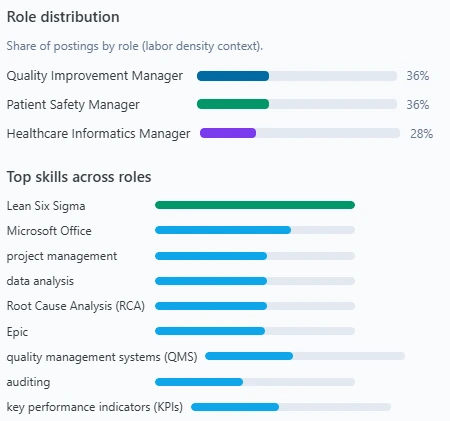
From the roles graduates enter to the curriculum that prepares them.
A viability study looks beyond the occupations a program has traditionally served. It also identifies emerging and adjacent roles where graduates are increasingly hired, examines what employers in those roles ask for, and then reviews the current curriculum against that demand.
- RolesThe standard roles graduates enter, along with emerging and adjacent roles in the field
- DemandSkills and competency themes drawn from employer postings for those roles
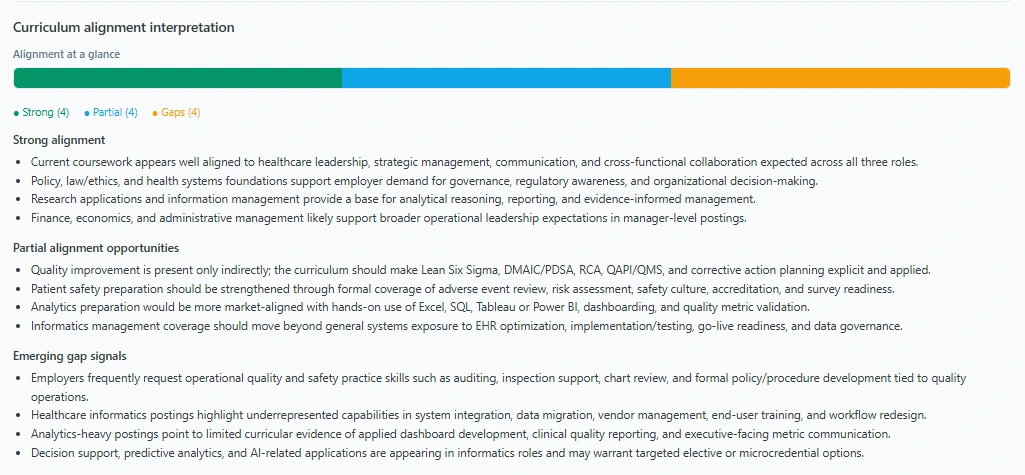
- AlignmentWhere the current curriculum is strong, where it is partial, and where gaps appear
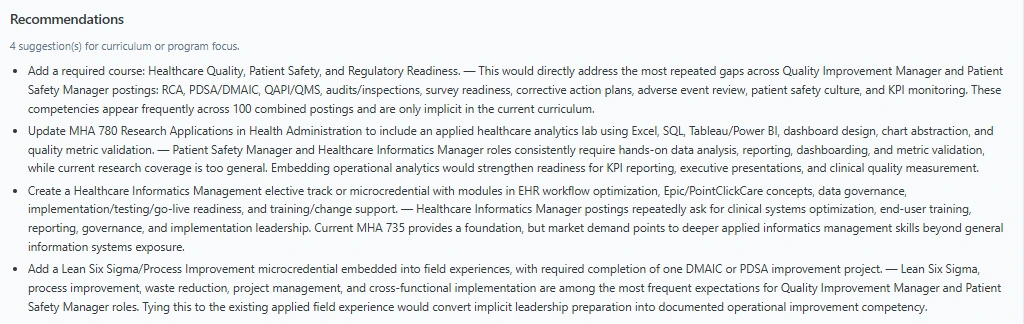
- RecommendationsSpecific course, track, and credential options tied to the evidence
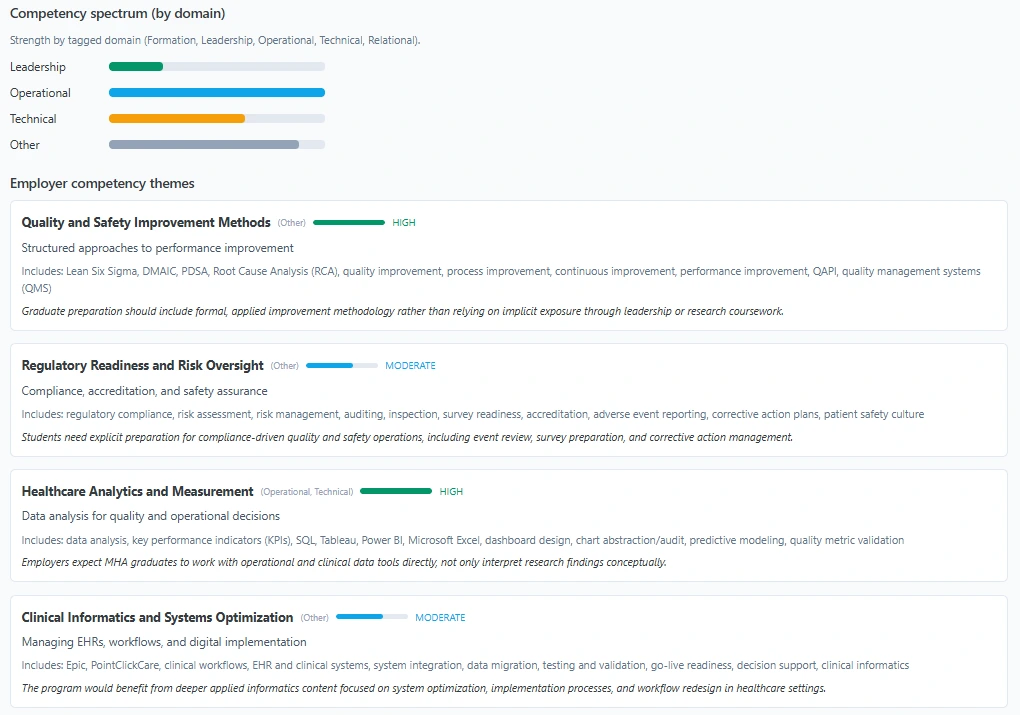
Alignments, opportunities, and gaps.
Provost Lab then reads the program’s current curriculum against those themes. Each competency is classed as a strength, a partial alignment, or a gap, and each classification is explained in plain language, so faculty can see the reasoning and question it.
The recommendations that follow are specific to the program, whether a new required course, a revision to an existing one, an elective track, or a microcredential. Each is tied to the employer evidence behind it and offered as an option for faculty and leadership to weigh.
Questions a viability study answers
- Is the program attracting, retaining, and graduating students in ways that support sustainability?
- How does it perform against peers that the leaders themselves have selected?
- Is the underlying issue demand, design, delivery, cost, curriculum, competition, or positioning?
- Which emerging roles could create new pathways to relevance?
- How well does the current curriculum align with the knowledge and skills those roles require?
- Which tracks, certificates, concentrations, or partnerships could improve viability?
- What value does the program provide beyond traditional performance measures?
- Which portfolio synergies, dependencies, or risks are connected to it?
A program in decline in a growing market is a different problem.
When a program is shrinking while comparable programs elsewhere are growing, the market is not the obstacle. The question becomes what those programs are doing differently.
Provost Lab compares the program with the peers gaining ground, examines how its curriculum aligns with the roles employers are hiring for, and points to adjustments in delivery and curriculum that could position it toward emerging and adjacent roles in the field.
Review a viability example.
We can walk through a full viability study on a program similar to one you are reviewing.